Nepal Festivals 2026: Experience Nepal’s Living Culture
Festival Dates, Stories & Meaningful Cultural Experiences in Bhaktapur and Nepal
There is a moment in Bhaktapur when you know the festival season has begun.
It may not always be a grand procession. Sometimes it begins with neighbours gathering in a courtyard, children watching curiously, elders guiding the younger generation, musicians preparing their instruments, or families getting ready for a ritual that has been part of their community for generations.
This is the beauty of experiencing festivals in Nepal.
You don’t simply watch a festival. You step into a living tradition.
From the ancient streets of Bhaktapur to the courtyards of Kathmandu and the temples of the Kathmandu Valley, festivals bring Nepal’s living heritage to life.
If you are planning to visit Nepal between August and November 2026, you are arriving during one of the country’s most culturally fascinating seasons.
Come for the festivals.
Stay for the stories.
Nepal Festival Calendar 2026
| Festival | 2026 Date | Where to Experience It |
| Gathamuga Chahre | 11 August | Kathmandu Valley, especially Newar communities |
| Gunla | 13 August – 12 September | Kathmandu Valley, especially Newar Buddhist communities |
| Nag Panchami | 17 August | Across Nepal |
| Janai Purnima | 22 August | Across Nepal |
| Gai Jatra / Saa Paru | 29 August | Bhaktapur & Kathmandu Valley |
| Krishna Janmashtami | 30 August | Temples across Nepal |
| Kushe Aunsi | 6 September | Family homes and temples |
| Teej | 9 September | Temples and communities across Nepal |
| Indra Jatra / Yenya | 6 September | Kathmandu Durbar Square & Old Kathmandu |
| Dashain | 22 September – 2 October | Across Nepal |
| Tihar | 19–23 October | Across Nepal |
| Mha Puja | 22 October | Newar homes, especially Bhaktapur and Kathmandu Valley |
Festival dates may be subject to official announcements and local observance. Some festivals continue for several days beyond the main festival day.
Why Experience Nepal Through Its Festivals?
Nepal is often introduced through its mountains, temples, stupas and UNESCO World Heritage Sites.
But there is another way to understand Nepal:
Follow its festivals.
Festivals take you beyond buildings.
They introduce you to the people who worship in the temples, musicians who continue traditional music, families who prepare festival foods, artisans who create ritual objects and communities that continue traditions passed from one generation to another.
A festival can show you a side of Nepal that you may never discover on a conventional sightseeing tour.
You may arrive to see a procession.
You may leave with a story.
1. Gathamuga Chahre – The Beginning of Festival Season
Date: 11 August 2026
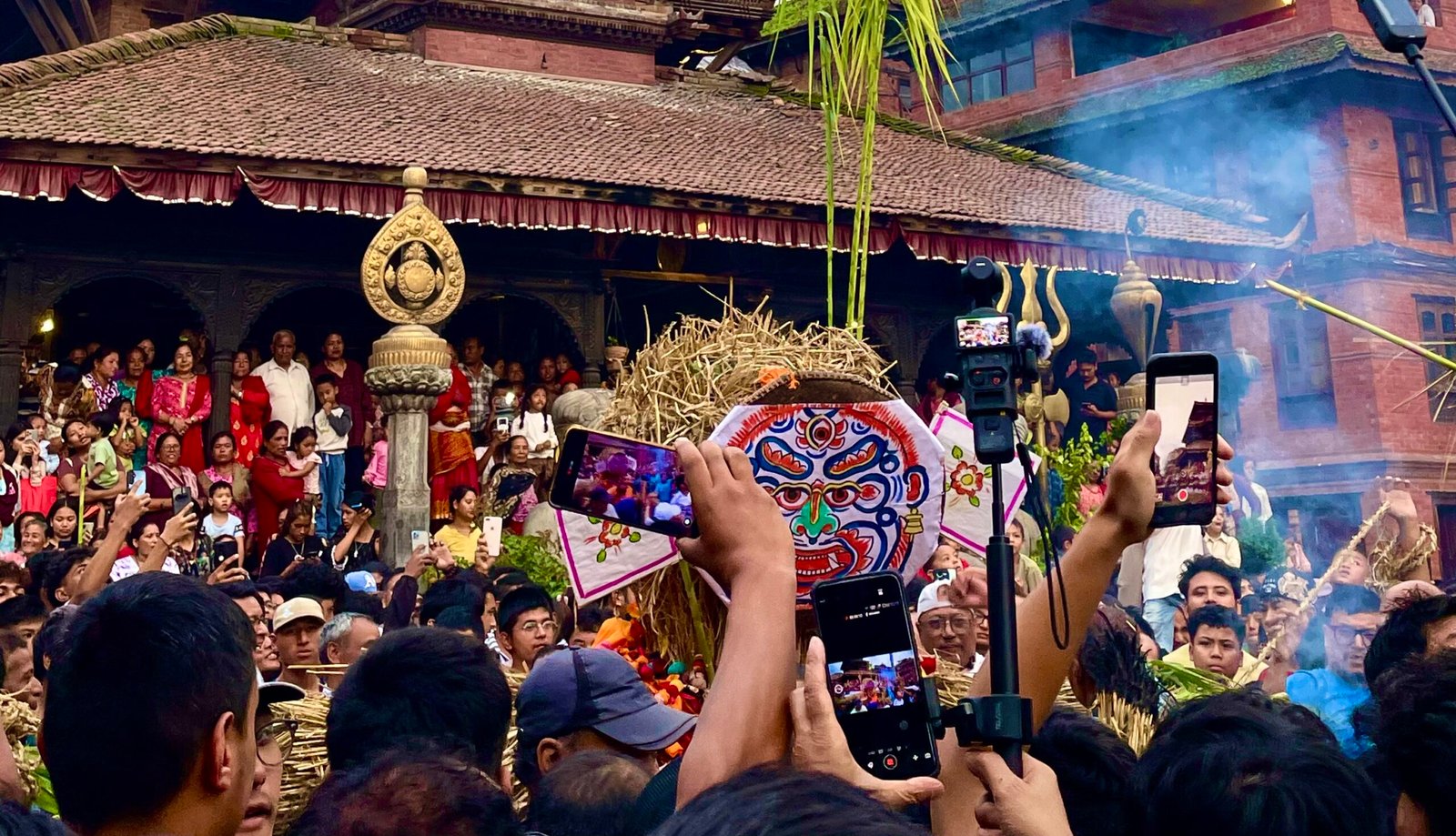
Gathamuga Chahre, also known as Gathemangal, marks an important point in the Newar cultural calendar.
Traditionally associated with driving away evil and negative influences, the festival is known for the creation and eventual removal of the Gathamuga figure.
But the most meaningful part is often not the figure itself.
It is the community behind it.
Neighbours come together. Children watch. Elders share knowledge. Generations participate in a tradition that continues to connect the past with the present.
For travellers, Gathamuga offers an opportunity to observe how cultural traditions are not simply displayed—they are practised by communities.
2. Gunla – A Month of Devotion
13 August – 12 September 2026
Gunla is one of the important sacred periods for Newar Buddhists.
During this month, devotees visit Buddhist shrines, courtyards, bahas and bahis, often accompanied by traditional music.
In the early morning, the old streets and Buddhist courtyards can take on a completely different atmosphere.
For travellers interested in the quieter side of Newar culture, Gunla offers a chance to experience devotion as part of everyday life.
It is not simply a festival to observe.
It is a season of religious practice, pilgrimage and community life.
3. Nag Panchami – Sacred Water and Ancient Beliefs
17 August 2026
Nag Panchami is dedicated to the worship of Nagas, the serpent deities associated with water, fertility and protection.
People visit Nag shrines and offer prayers.
In the Kathmandu Valley, where ponds, stone spouts and traditional water sources have historically been important to settlement life, the festival offers a glimpse into the relationship between communities, water and sacred spaces.
For travellers, understanding the story behind a ritual can make what you see much more meaningful.
4. Janai Purnima / Gunhi Punhi – Sacred Threads and Newari Traditions
22 August 2026
Janai Purnima is celebrated throughout Nepal, while Newars traditionally know the day as Gunhi Punhi.
The festival is associated with sacred threads, family gatherings, religious observances and traditional foods.
One of the foods associated with this season is Kwati, a nutritious soup made from mixed sprouted beans.
For visitors, food can be one of the most meaningful ways to understand culture.
A bowl of traditional food can tell a story about family, season, tradition and community.
5. Gai Jatra – Saa Paru in Bhaktapur
29 August 2026
One of the most meaningful festivals to experience in Bhaktapur
Gai Jatra, or Saa Paru, is one of the most distinctive festivals of the Kathmandu Valley.
It is colourful, lively and filled with music, costumes, processions and community gatherings.
But behind the celebration is remembrance.
Families who have lost loved ones remember them through the festival. The tradition also reflects the idea that grief can be shared and that families do not have to face loss alone.
In Bhaktapur, Gai Jatra is particularly distinctive, with celebrations traditionally continuing for several days.
For visitors, it is important to remember that Gai Jatra is not simply a colourful street festival for photography.
It is a deeply personal cultural tradition.
6. Krishna Janmashtami – A Night of Devotion
30 August 2026
Krishna Janmashtami celebrates the birth of Lord Krishna.
Devotees gather at temples and Krishna shrines for prayers and celebrations that can continue into the evening and night.
The atmosphere is different from Gai Jatra—more devotional and contemplative—but it is another important part of Nepal’s rich festival calendar.
7. Kushe Aunsi – Family, Fathers and Remembrance
6 September 2026
Not every important festival fills the streets.
Kushe Aunsi is traditionally associated with Father’s Day in Nepal and is a more intimate occasion connected with fathers, family and remembrance.
This is something worth remembering when travelling through Nepal:
Culture does not always happen on a stage.
Sometimes it happens around a family meal.
Sometimes in a small shrine.
Sometimes between parents and children.
These quiet moments are also part of Nepal’s living heritage.
8. Teej – Songs, Red Saris and Sisterhood
9 September 2026
Then the colour changes.
Red saris appear throughout the streets.
Songs begin.
Women gather together.
This is Teej, one of Nepal’s most vibrant women’s festivals.
Teej combines religious observance with music, dance, fasting and community gathering. Women gather at temples and within their communities to sing, dance and celebrate.
The Nepal Tourism Board describes Teej as a three-day festival celebrated by women across Nepal.
For travellers, the best way to understand Teej is to look beyond the colour and movement.
Listen to the songs.
They carry stories too.
9. Indra Jatra – Kathmandu Comes Alive
6 September 2026
Indra Jatra, known as Yenya, is one of the great festivals of the Newar community of the Kathmandu Valley.
For several days, the old city of Kathmandu transforms.
Traditional music fills the streets.
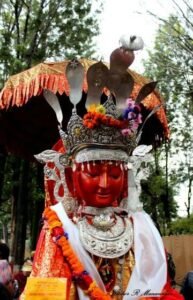
Masked dancers appear.
Chariots move through the historic alleys.
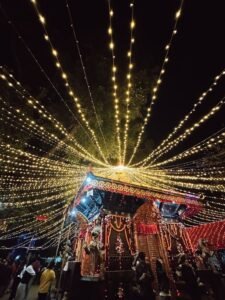
Oil lamps illuminate ancient temples and palace buildings.
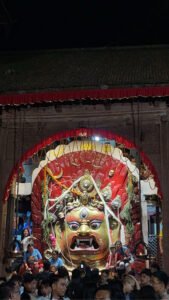
The Kumari, the Living Goddess, is taken through the historic streets in her chariot, accompanied by the chariots of Ganesh and Bhairav.
The festival is connected with Indra, the Hindu god of rain and heaven, and carries stories that have been passed through generations.
When you walk through Kathmandu during Indra Jatra, you are not simply watching a parade.
You are walking through a story.
10. Dashain – When Nepal Comes Home
22 September – 2 October 2026
Dashain is Nepal’s biggest national festival and one of the most important times of the year for Nepali families.
People travel home.
Families gather.
Homes become places of celebration.
Elders give tika and blessings.
Families share meals and spend time together.
The Nepal Tourism Board describes Dashain as a long festival centred on worship, family reunions, blessings, gifts and puja.
For visitors, Dashain offers something deeper than a sightseeing opportunity.
It offers an insight into the importance of family, blessings, belonging and coming home in Nepali society.
11. Tihar – Nepal’s Festival of Lights
19–23 October 2026
Then comes Tihar.
The festival of lights transforms Nepal.
Homes are decorated with lamps, flowers, candles and colourful designs.
Different days honour crows, dogs, cows and Lakshmi, while the festival concludes with Bhai Tika—the celebration of the bond between brothers and sisters.
In Newar communities, the fourth day is particularly meaningful because of Mha Puja, the ritual of worshipping oneself.
Tihar is one of the best times to experience the warmth of Nepal’s homes and neighbourhoods.
12. Mha Puja – Experience the Newar New Year
22 October 2026
A particularly meaningful experience in Bhaktapur
Mha Puja means “worship of the self.”
It is a unique Newar ritual that celebrates one’s existence, with rituals associated with purification, strength, prosperity and longevity.
Mha Puja also marks Nepal Sambat, the Newar New Year.
This is perhaps one of the clearest examples of why meaningful cultural experiences should be personal.
Mha Puja is not something you fully understand by standing in a square and watching from a distance.
Traditionally, it is experienced within the home, around the mandala, with family.
You see the preparations.
You learn the meaning.
You sit together.
You share food.
And suddenly, a tradition that may have seemed unfamiliar becomes something you can feel.
Why Bhaktapur Is Special During Festival Season
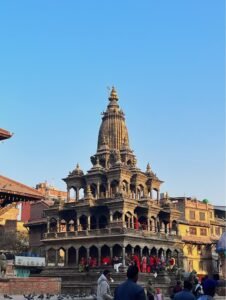
Bhaktapur is more than a UNESCO World Heritage Site.
It is a living city.
Its temples are not simply monuments.
Its squares are not simply photo locations.
Its courtyards are not simply architectural spaces.
They are places where people worship, celebrate, cook, create, gather and pass traditions from one generation to the next.
This is why festival season is such a special time to visit Bhaktapur.
The heritage comes alive.
Food is prepared by families.
Music is played by local musicians.
Crafts are made by artisans.
Stories are passed from grandparents to children.
And historic streets become gathering places once again.
This is what we mean by living heritage.
Planning to Visit Nepal During Festival Season?
If you are travelling to Nepal between August and November 2026, consider planning your trip around a festival.
Choose the festival that interests you.
Arrive a little earlier.
Spend time in the community.
And allow yourself to experience more than the main procession.
You may arrive for the temples.
But you might stay for the stories.
You may come to photograph a procession.
But you may leave remembering the people you met.
You may think you are visiting a festival.
But perhaps what you are really witnessing is a community keeping its identity alive.
Experience Nepal in Style
Come when Nepal is celebrating.
Don’t just see Nepal.
Experience it.